For manufacturers competing in today’s global marketplace, standing still isn’t an option.
Radian Thermal Products, a leading manufacturer of thermal management solutions serving the military, telecommunications, networking, and medical industries, reached that realization several years ago. After decades of relying on aging CNC equipment, the company knew it needed a new approach to remain competitive.
“We were using 30-year-old CNC machines,” explains Terry Sin, President and CEO of Radian. “To be competitive, you can’t keep using old machines and old techniques.”
That decision launched a transformation that would dramatically increase productivity, improve quality, lower manufacturing costs, and unlock the ability to run production around the clock.
Like many American manufacturers, Radian faced two significant obstacles.
First, production was limited to a single eight-hour shift. Although the equipment sat idle for another sixteen hours every day, expanding operations meant hiring second and third shift employees—a difficult task in California’s competitive labor market.
At the same time, customer demand continued to grow.
“Our customers wanted us to produce more parts every quarter,” says Jesse Cox, Production Manager at Radian. “To keep up with those production goals without automation, we would have needed an outlandish number of machines and spindles running.”
Adding labor wasn’t practical. Adding more machines alone wasn’t the answer.
The company needed a way to maximize the equipment it already had.
Many manufacturers assume automation only makes sense for extremely high-volume production.
Radian’s work is different.
Typical production runs range from approximately 50 parts to several hundred parts—exactly the type of high-mix, lower-volume environment where traditional automation has often been considered difficult to justify.
Trinity Automation changed that assumption.
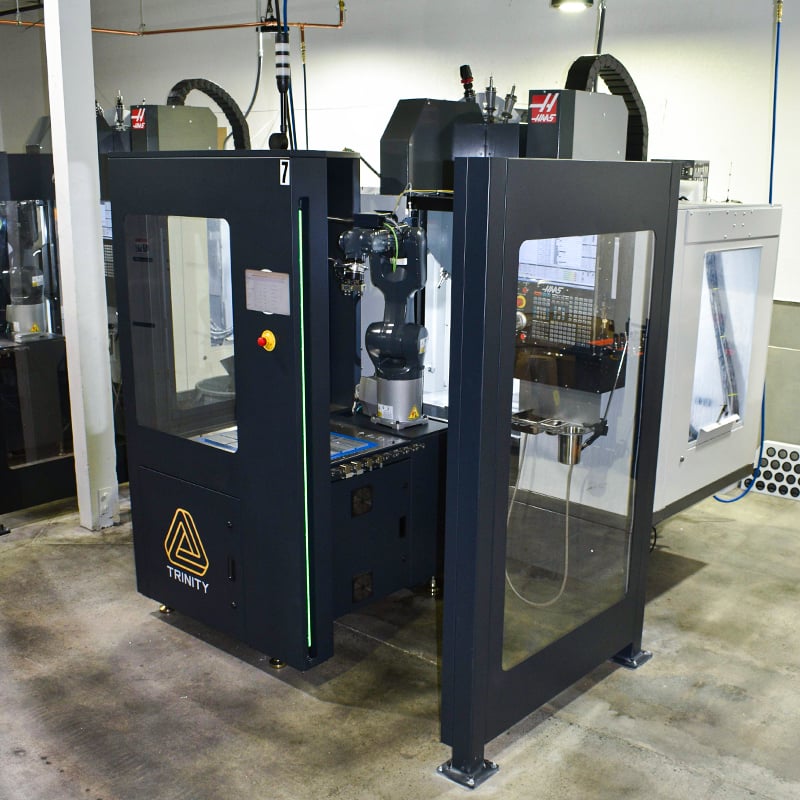
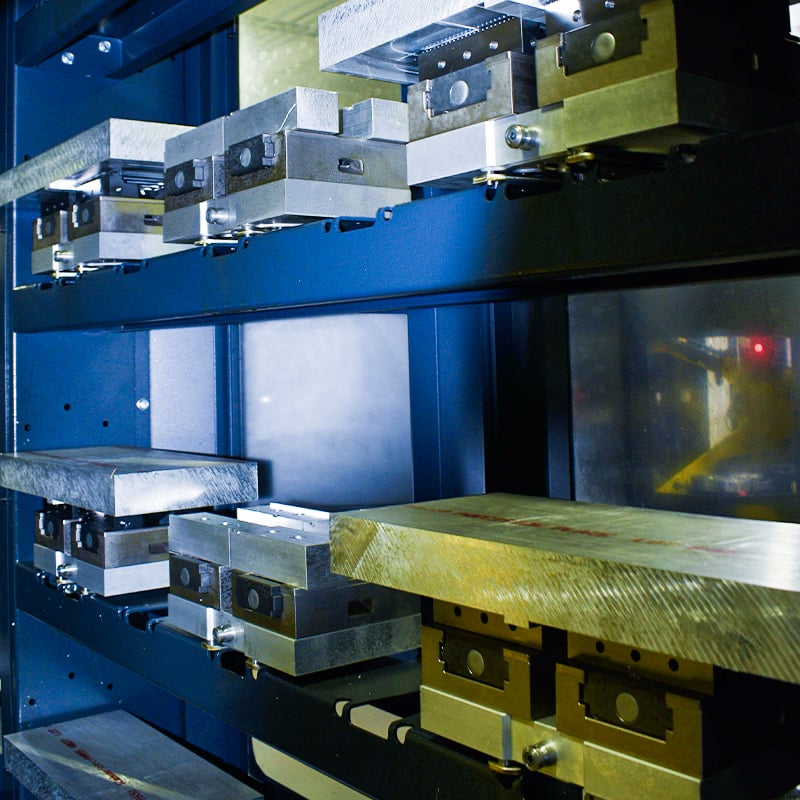
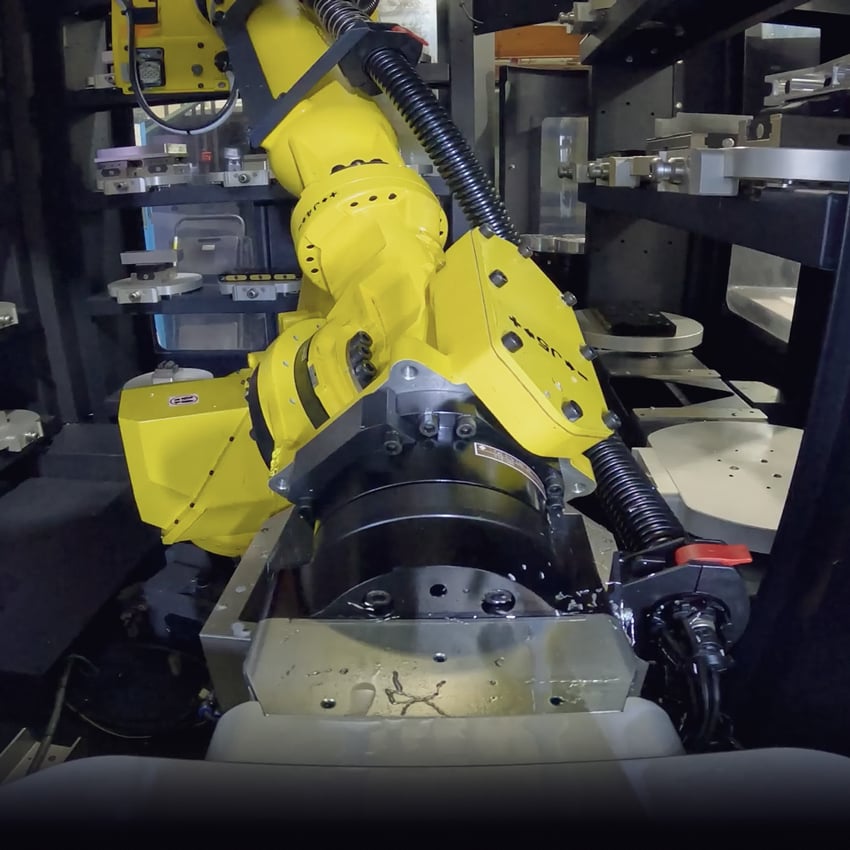
Instead of dedicating automation to a single part, operators prepare multiple jobs throughout the day. At the end of the shift, they simply start the automation system and allow production to continue unattended throughout the night.
“When it’s time to go home, we press Start and let it run all night,” says Cox. “Then we come back in the morning, unload the finished parts, and begin setting up the next night’s production.”
The result is a machine shop that continues producing long after employees have gone home.
KL Engineering’s journey toward palletized automation followed its larger shift toward vertical integration.
The company first brought welding and waterjet cutting in-house. Then CNC machining followed. As production quantities increased, the need for scalable, efficient automation became clear.
“We didn’t want to add a lot of overhead programming robots, designing end effectors, and interfacing with individual parts that may never come back.”
For a high-mix contract manufacturer, direct part handling with custom robotic tooling would have required significant engineering time—time better spent making parts.
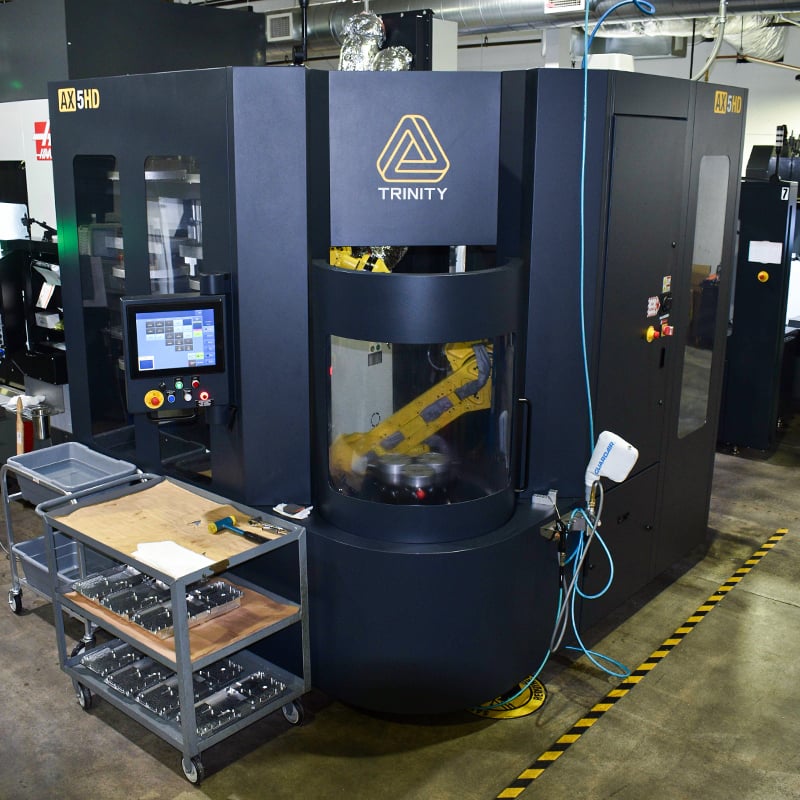
A palletized solution was the answer.
Technology only creates value if people are comfortable using it.
One of the biggest surprises for Radian was how quickly operators embraced the new systems.
Approximately fifteen machinists now work with Trinity automation throughout the shop. Thanks to the intuitive controls, training required only a single day before operators were confidently running production.
“The system itself is very simple,” says Cox. “They showed us how to use it, and we were off and running.”
Because the robot performs the repetitive loading process, machinists can oversee multiple machines simultaneously instead of spending their day loading and unloading parts.
“The employees are so much more efficient now that they can actually run three or four machines.”
Automation didn’t just improve throughput—it improved consistency.
Manual loading naturally introduces small variations between cycles. Automated loading repeats the process precisely every time.
“You dial it in once,” says Cox, “and every single part that follows is perfect.”
That repeatability has significantly improved product quality while reducing operator workload.
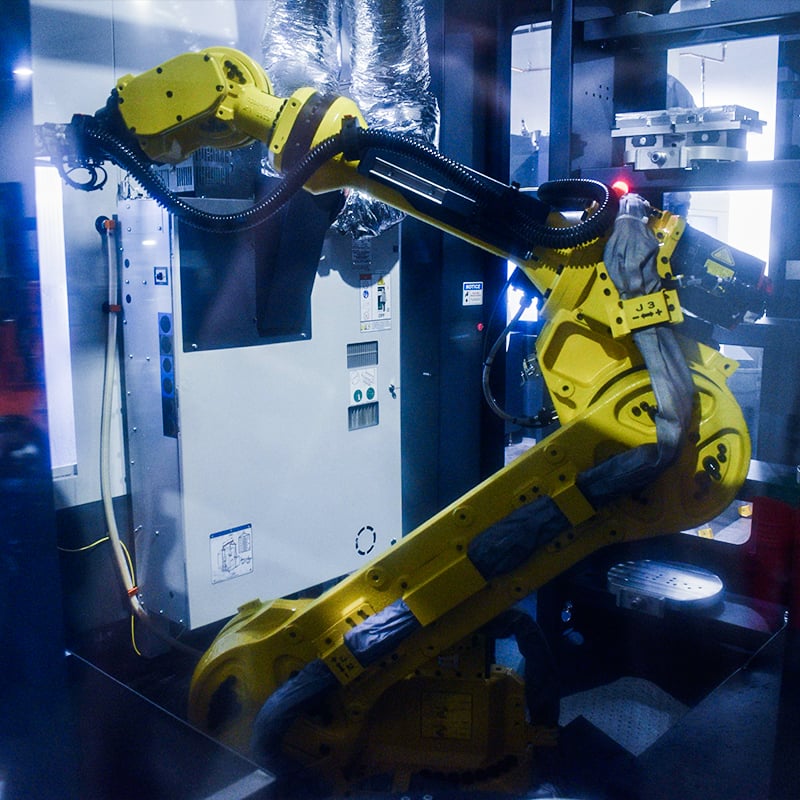
The greatest transformation came from machine utilization.
Before automation, production was limited to a traditional forty-hour work week.
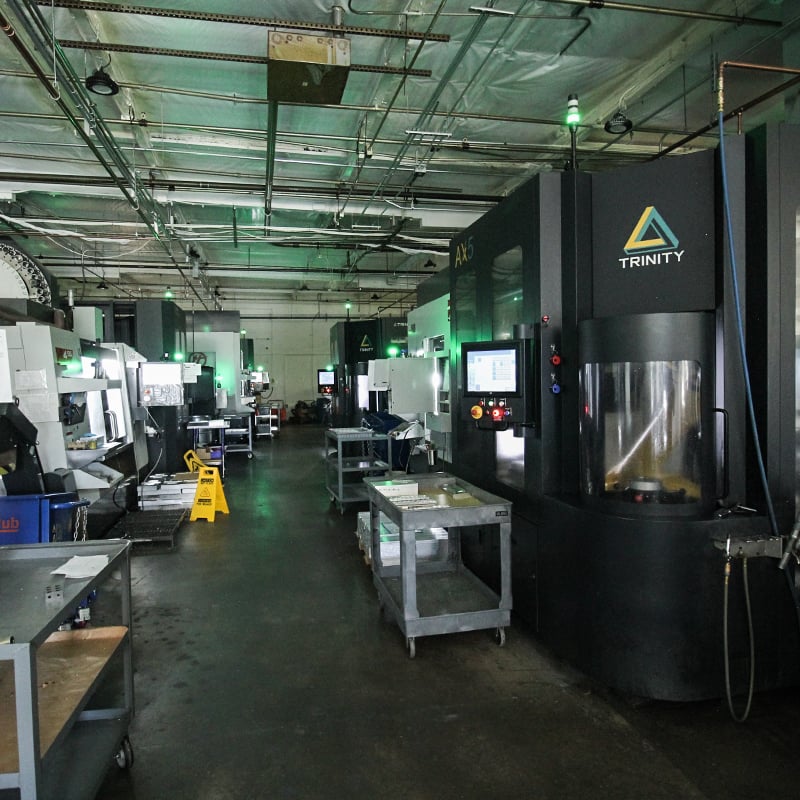
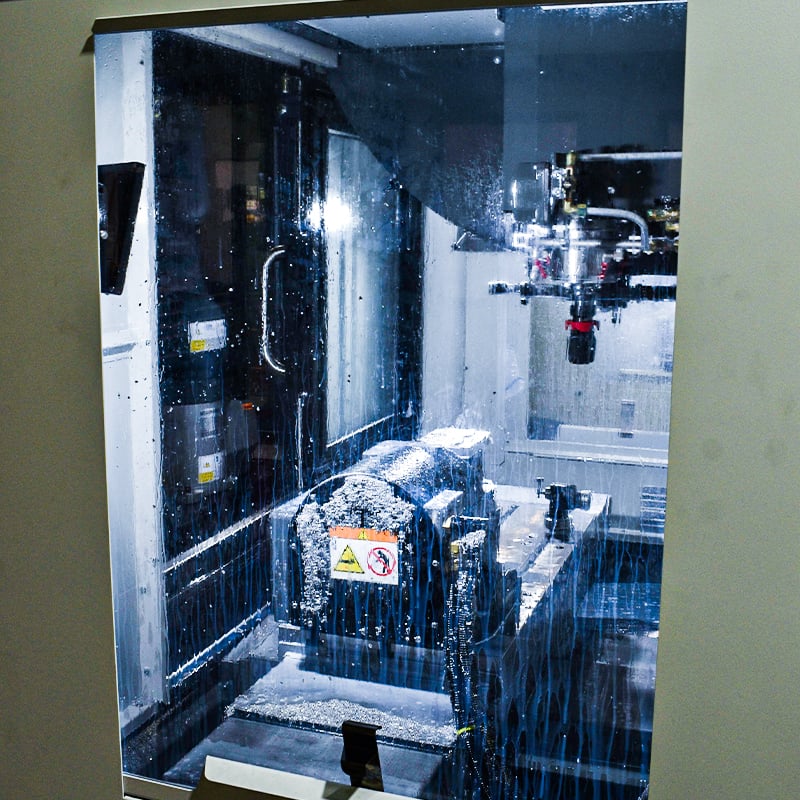
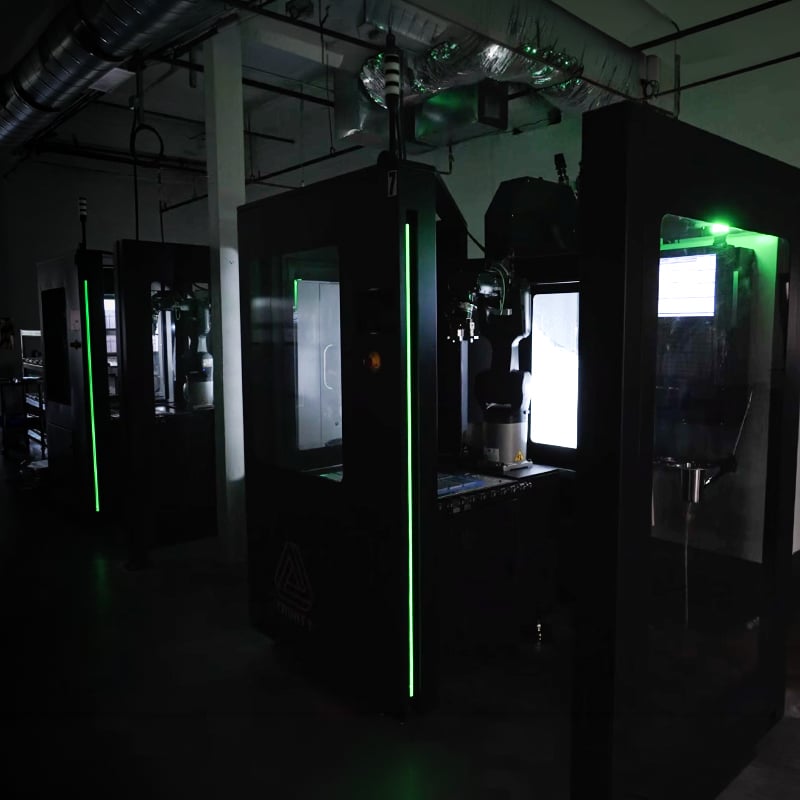
Today, Radian routinely runs its machining centers 24 hours a day, seven days a week.
Instead of approximately 40 productive hours each week, the company now achieves roughly 142 hours of machine runtime through unattended operation.
“Our productivity has increased fivefold,” says Cox. “We’ve actually doubled the amount of work we do without really increasing the number of employees.”
Even more impressive, the company believes additional capacity still remains.
The operational improvements quickly translated into measurable financial results.
One representative production job illustrates the impact:
• Manufacturing cost dropped from approximately $300 per part to under $100 per part.
• Weekly output increased from approximately 20 parts to 50 parts.
The improvements came from a combination of longer machine utilization, consistent automated operation, and reduced operator intervention.
Higher throughput, lower costs, and improved consistency created a return on investment that made future automation decisions straightforward.
“The return on investment was so easy,” says Terry Sin, “that we decided we needed to buy more.”
Reliable equipment is only part of the equation.
According to Radian, Trinity’s support has been equally important.
While service calls are rare, the Trinity team responds quickly whenever assistance is needed—often the same day or by the following morning.
“We’re super happy with their customer service,” says Cox.
For Radian, automation became more than a productivity improvement—it became a competitive strategy.
Manufacturers in the United States continue to compete against lower-cost global production. Rather than chasing lower labor costs, Radian chose to maximize machine utilization and operate lights-out.
“Trinity has been a lifesaver,” says Sin. “It got us out of the hole we were in and put us back on the map to operate 24/7.”
He concludes with a message many manufacturers are beginning to recognize:
“The only way you can compete today and remain competitive in America is with an automation system like Trinity.”
Reliable equipment is only part of the equation.
According to Radian, Trinity’s support has been equally important.
While service calls are rare, the Trinity team responds quickly whenever assistance is needed—often the same day or by the following morning.
“We’re super happy with their customer service,” says Cox.